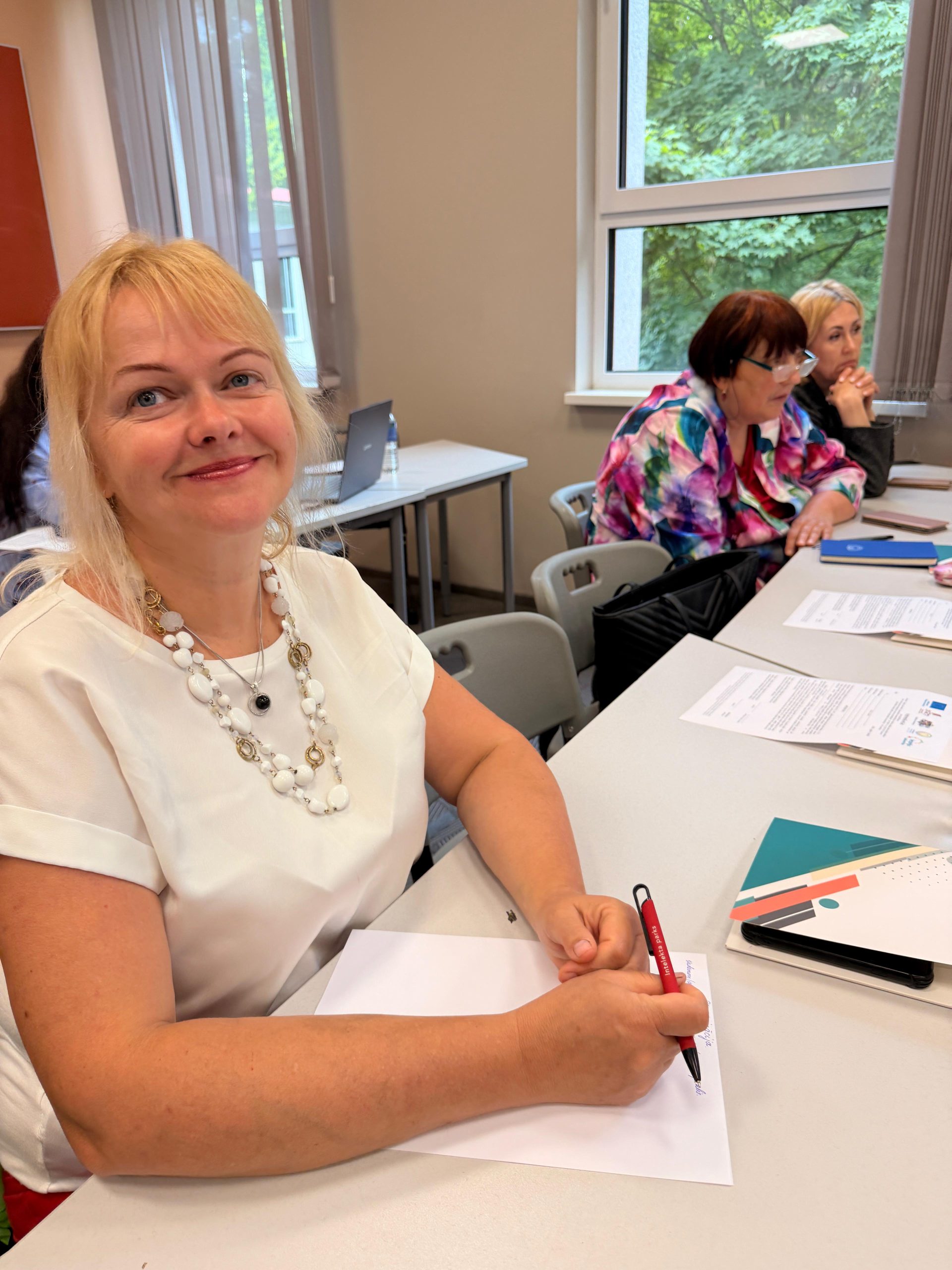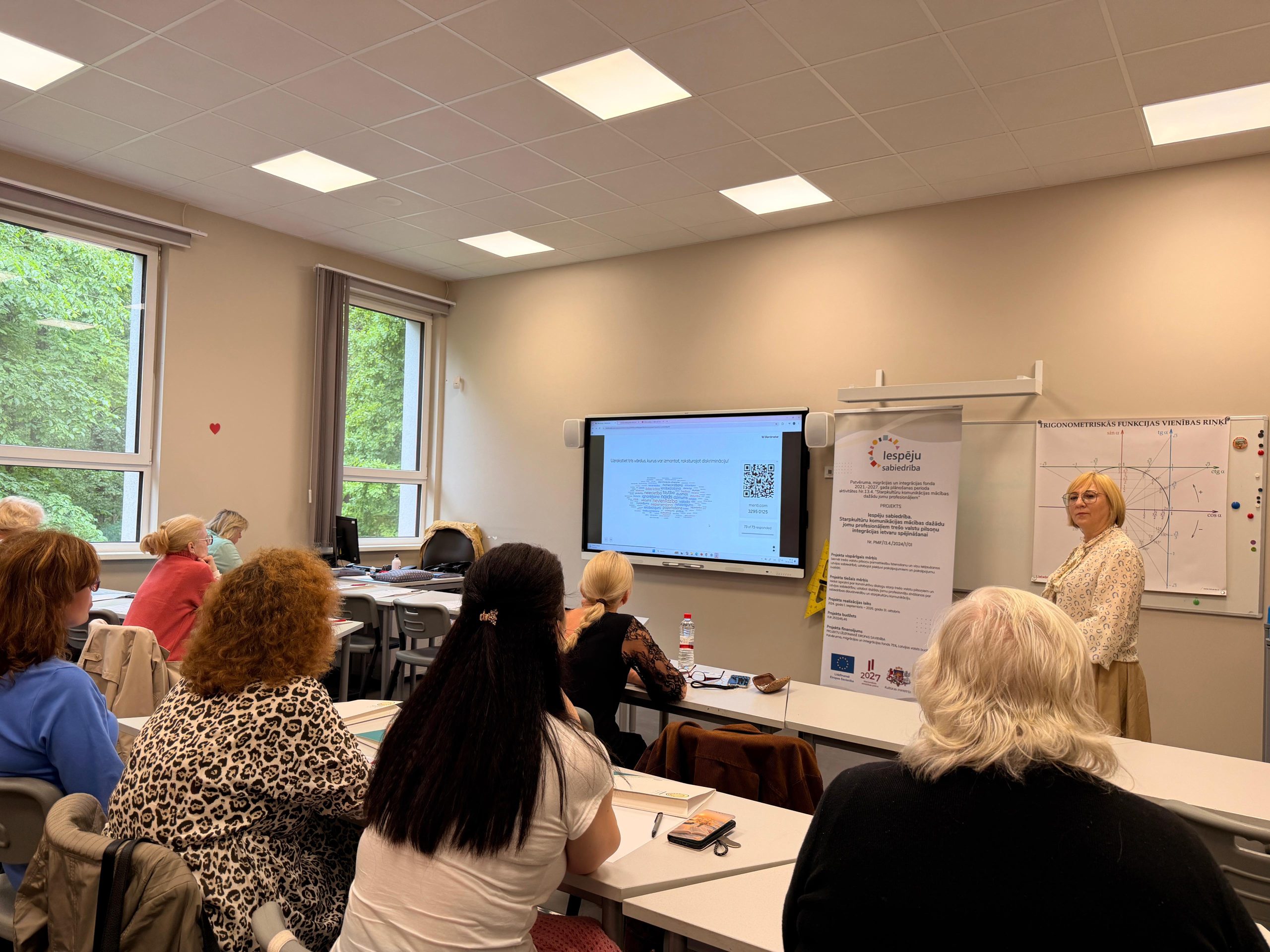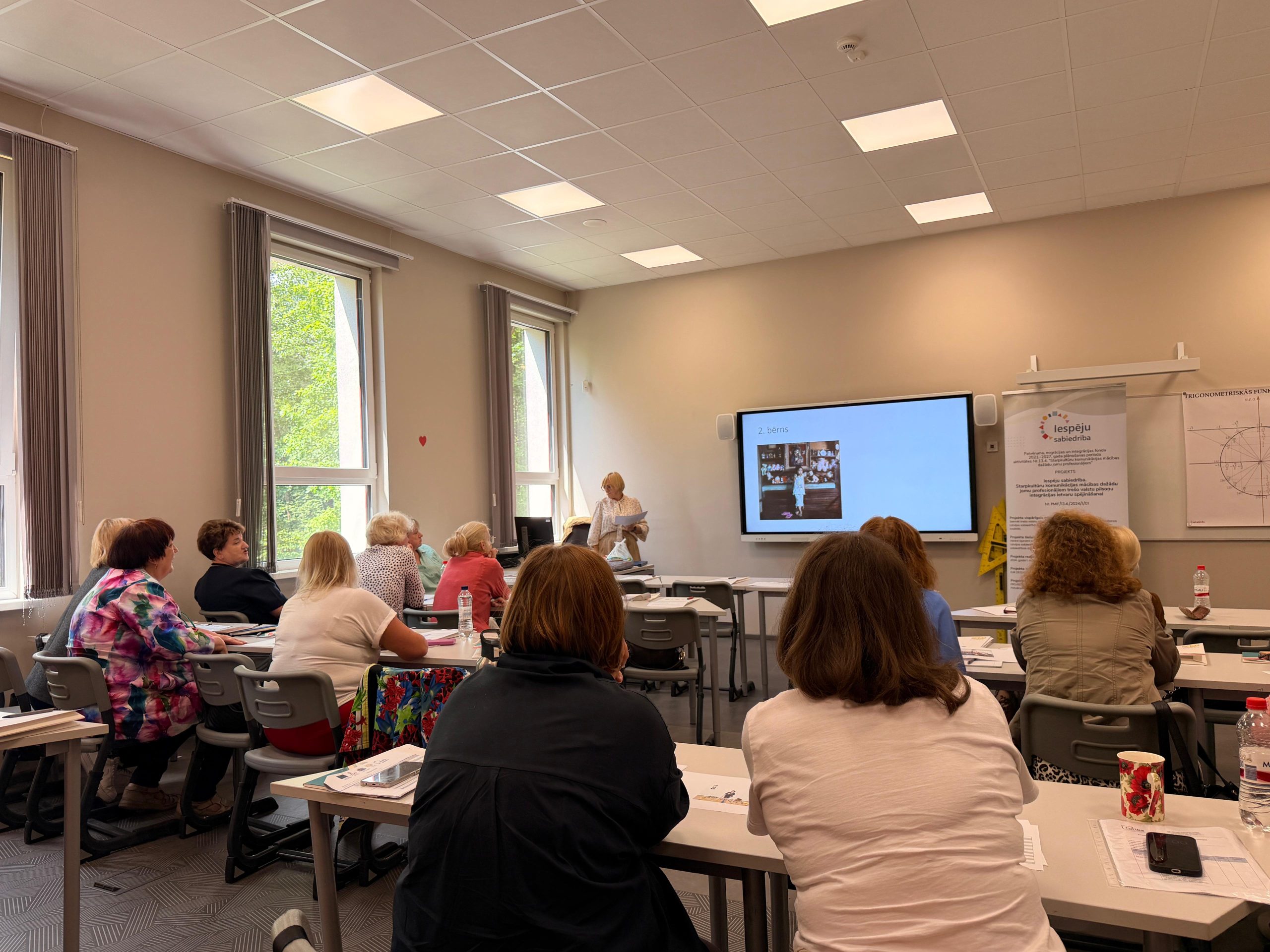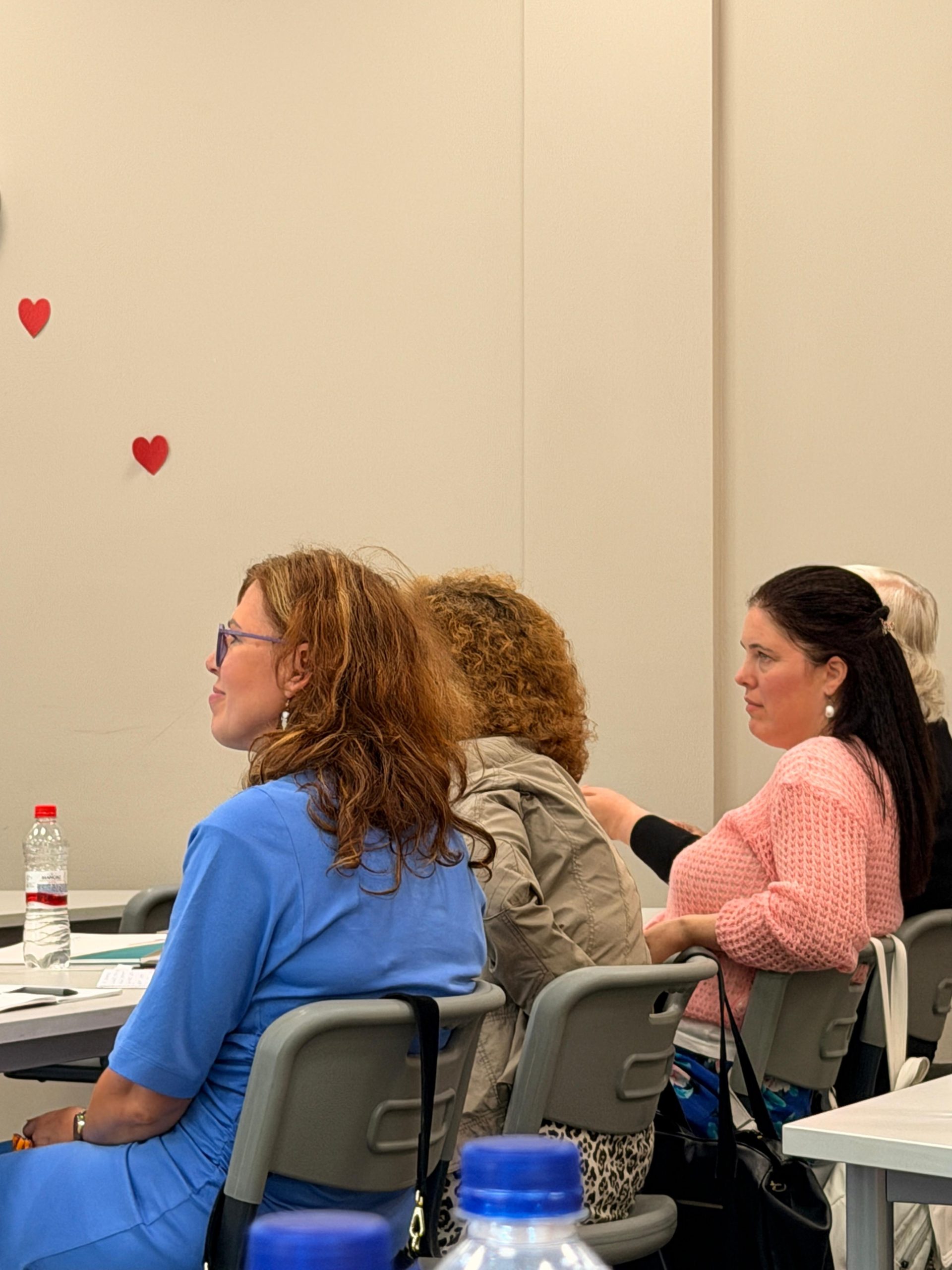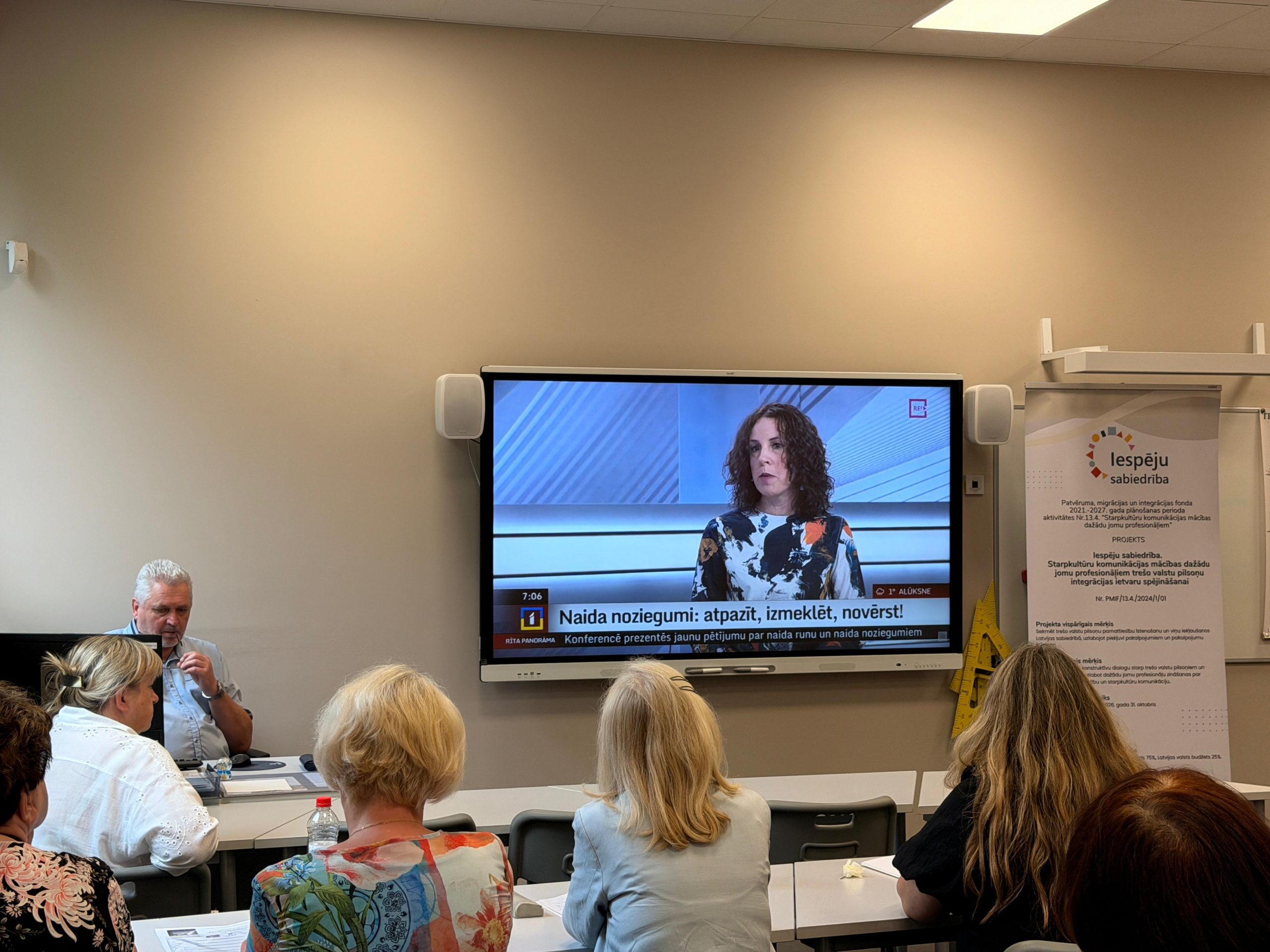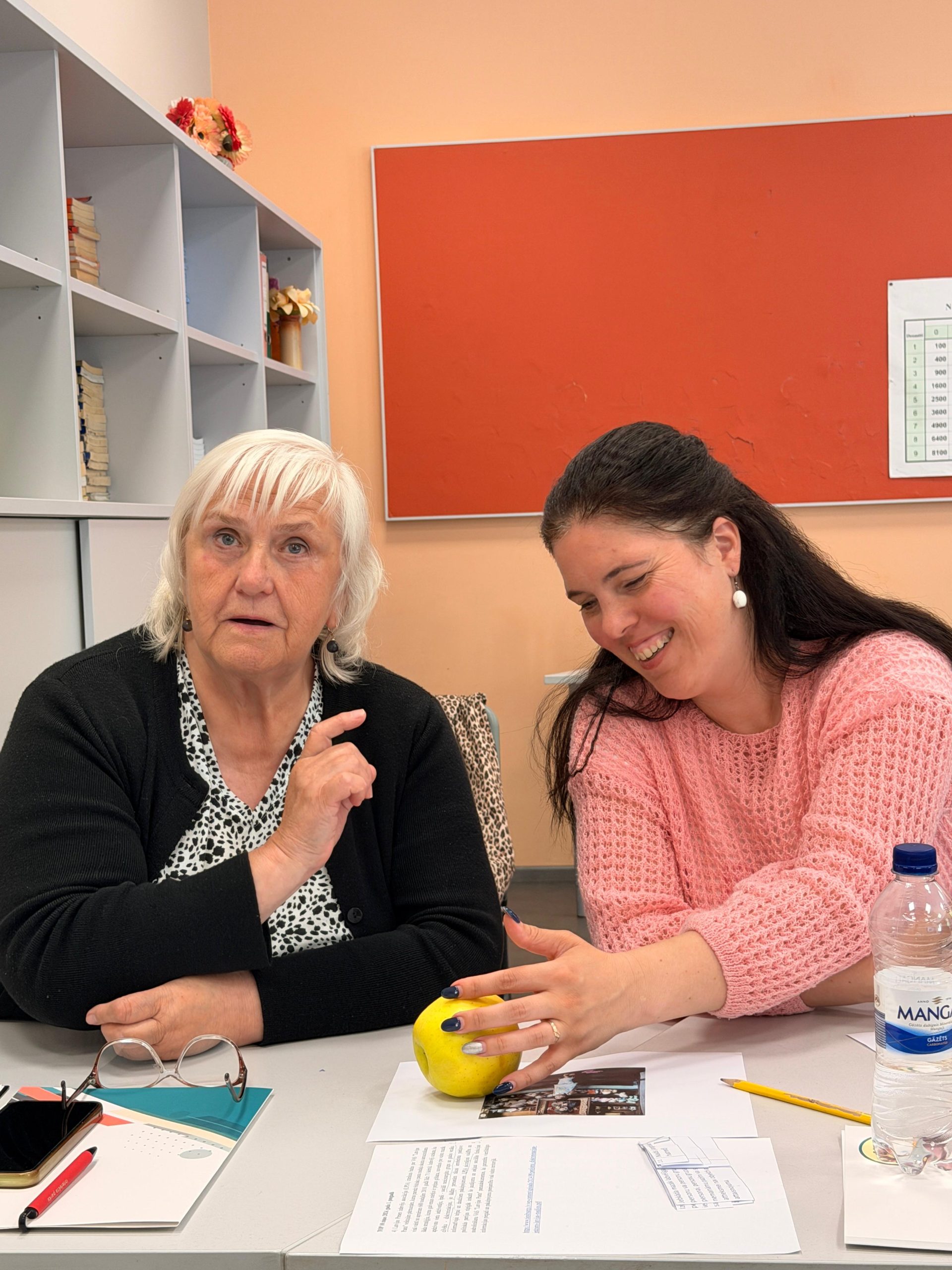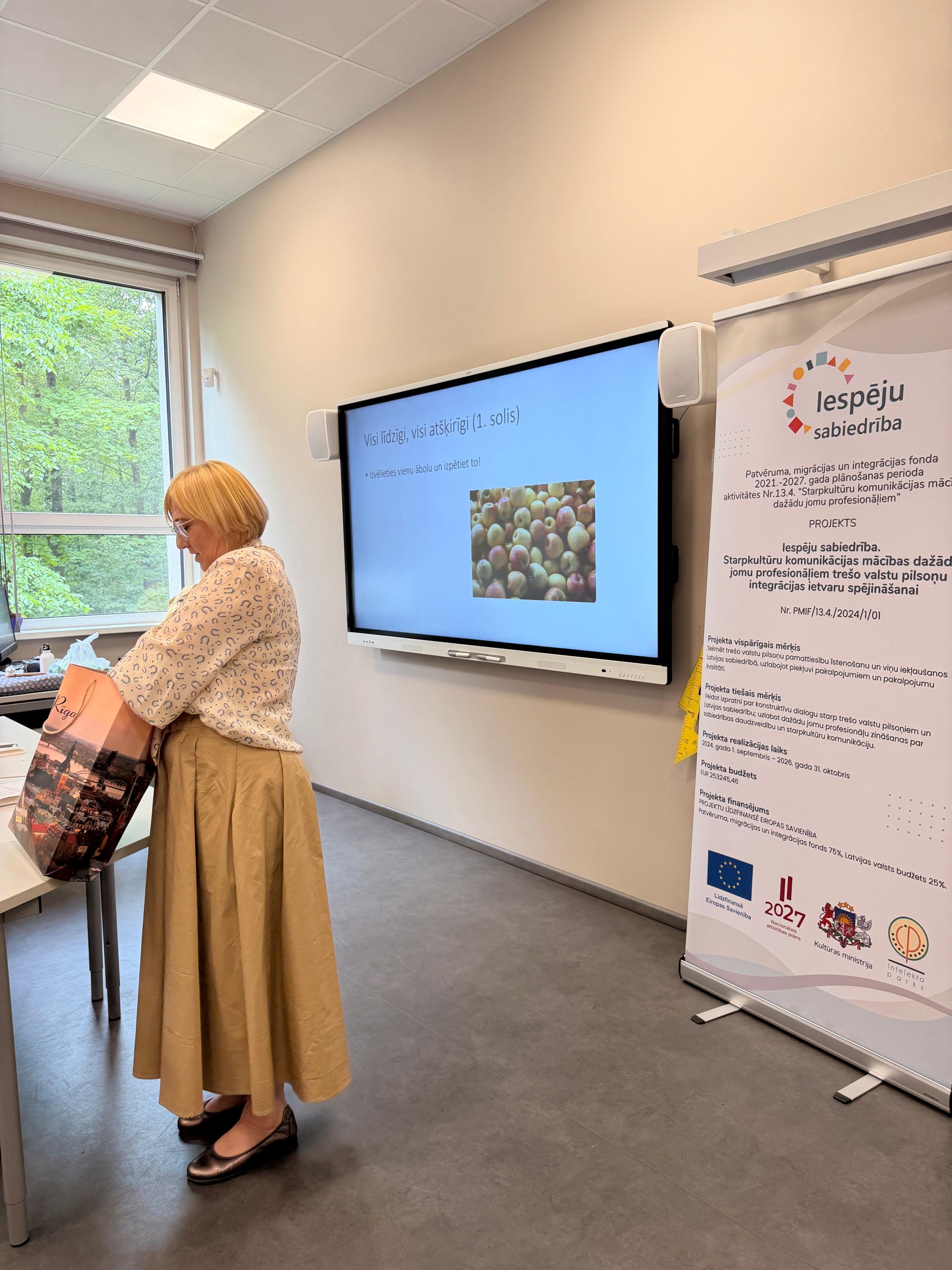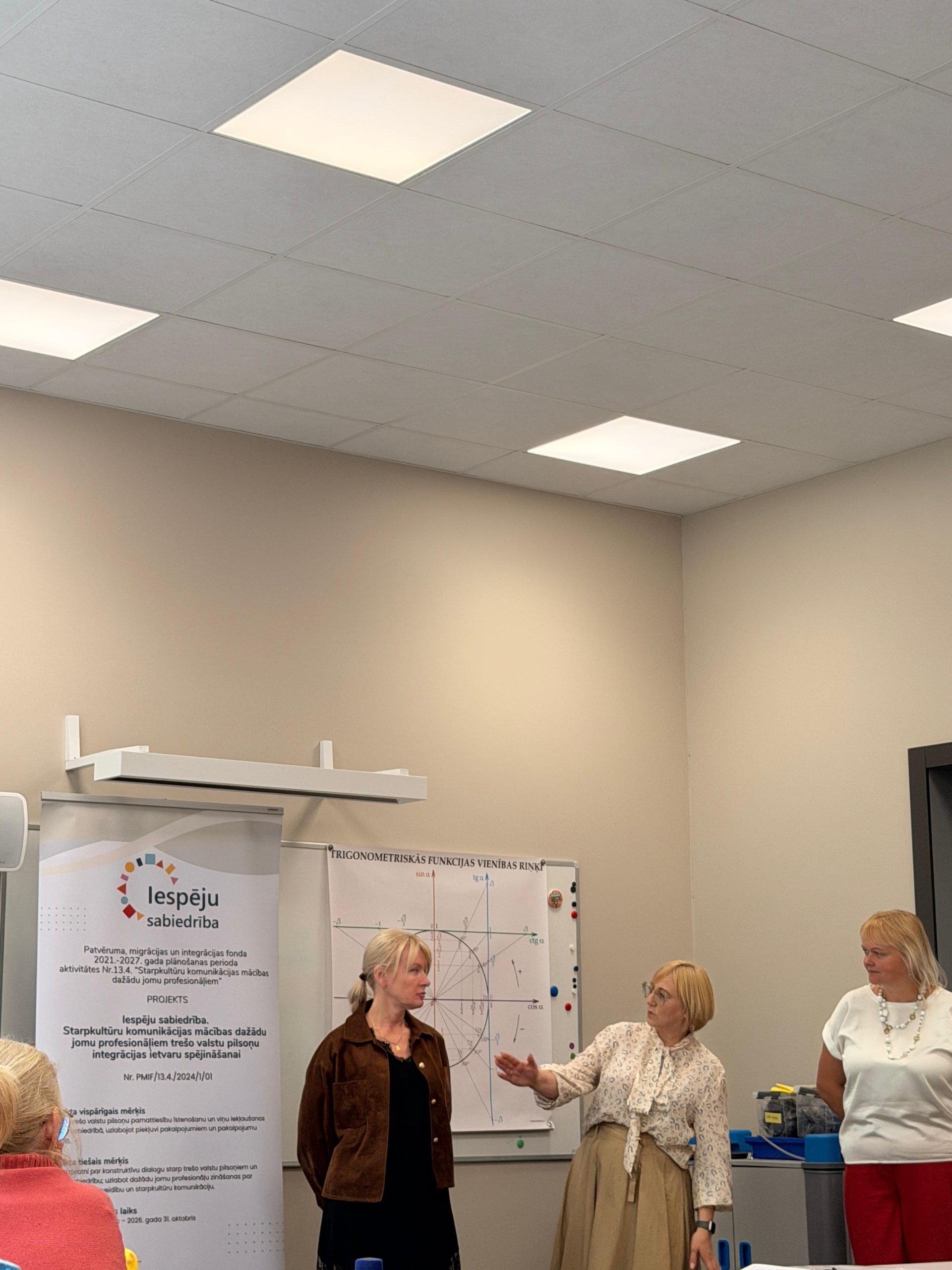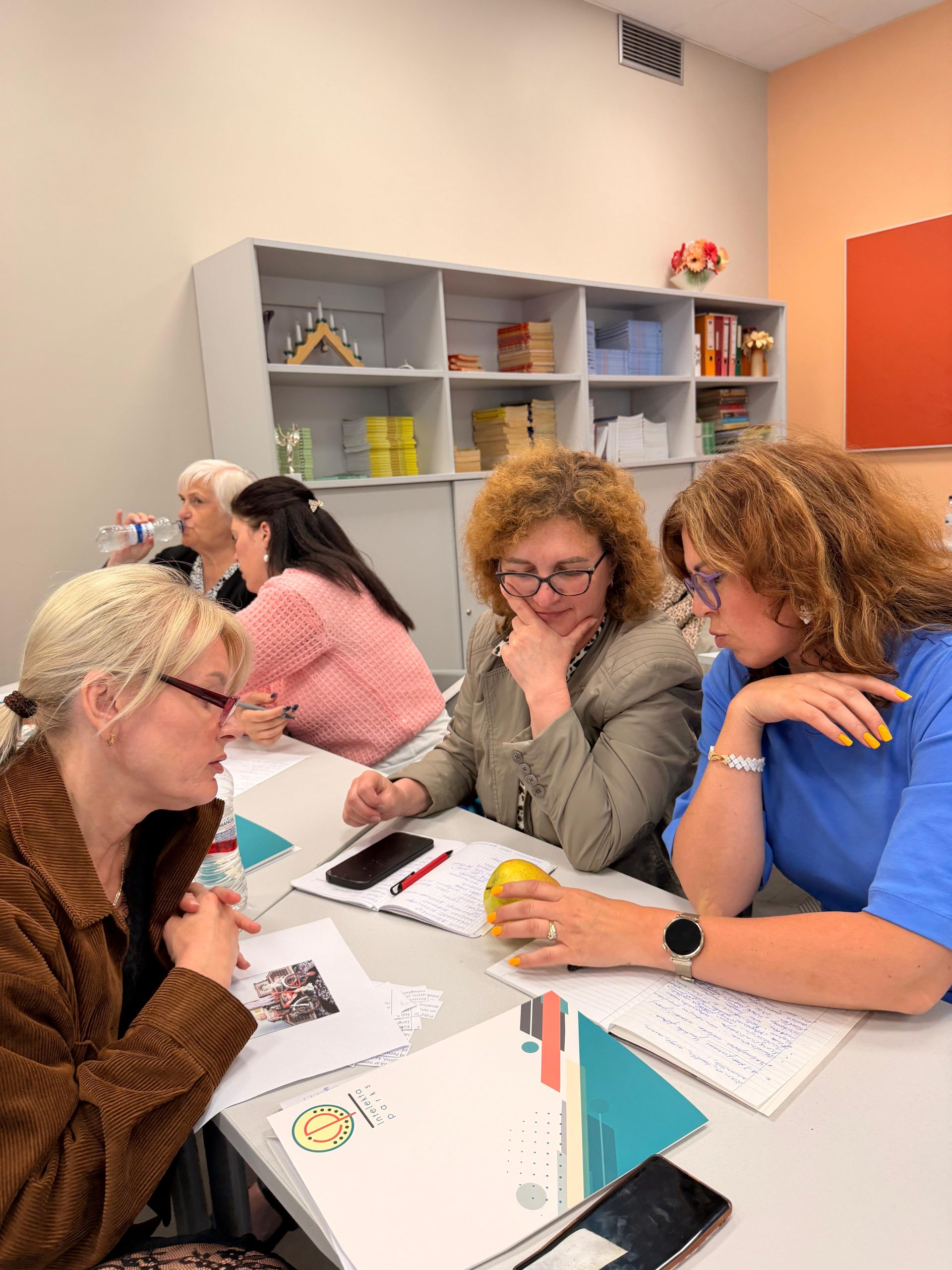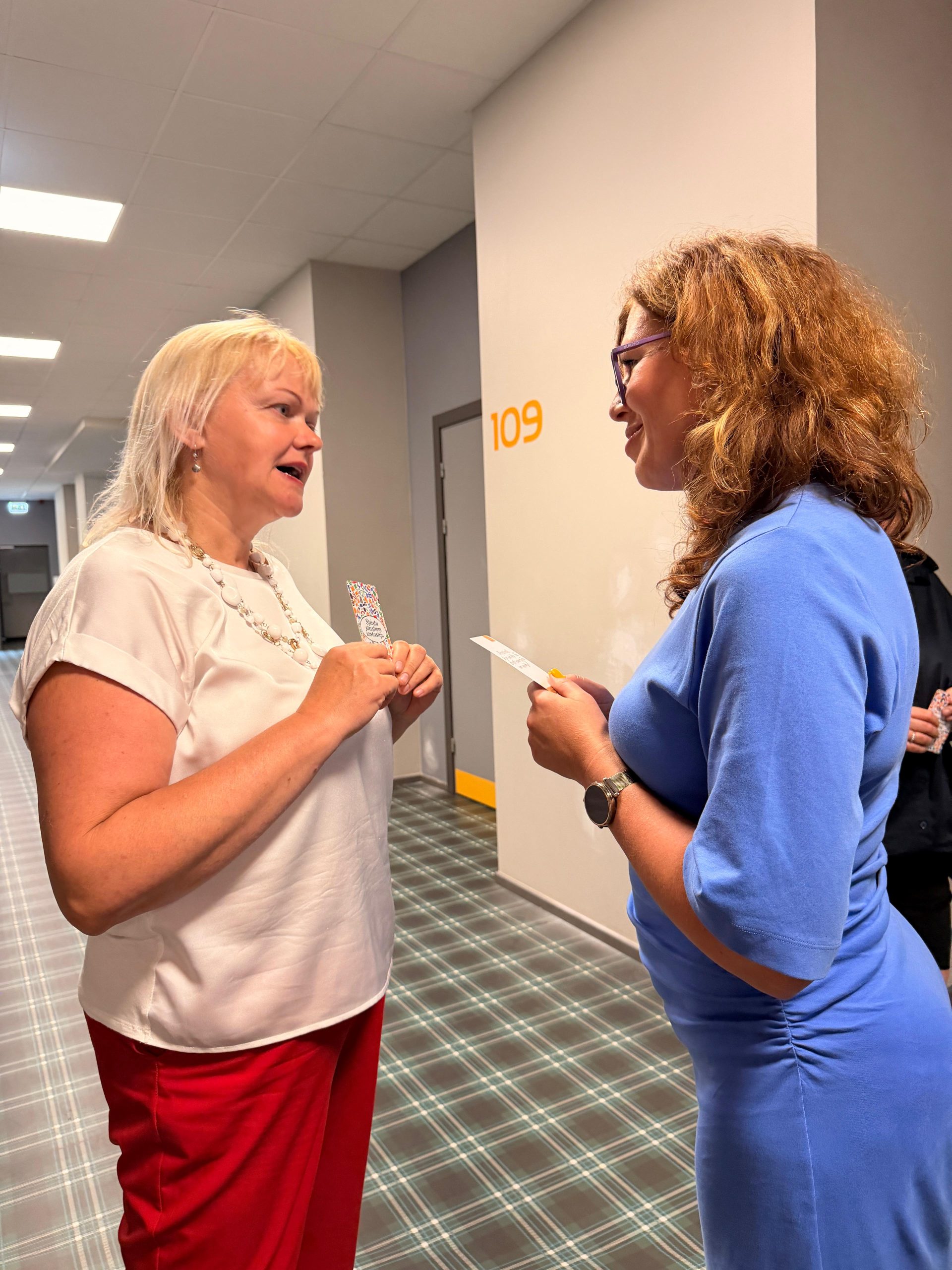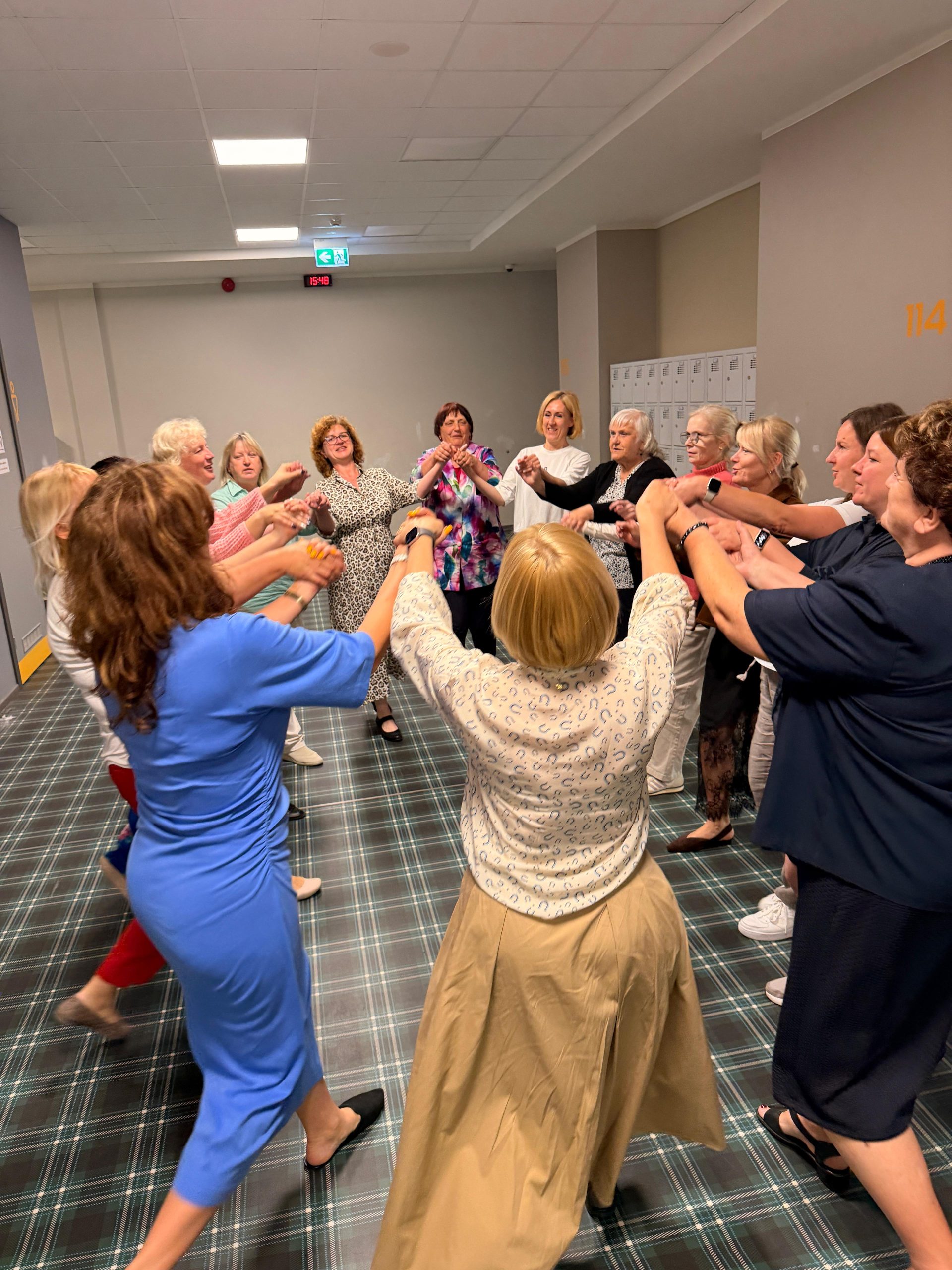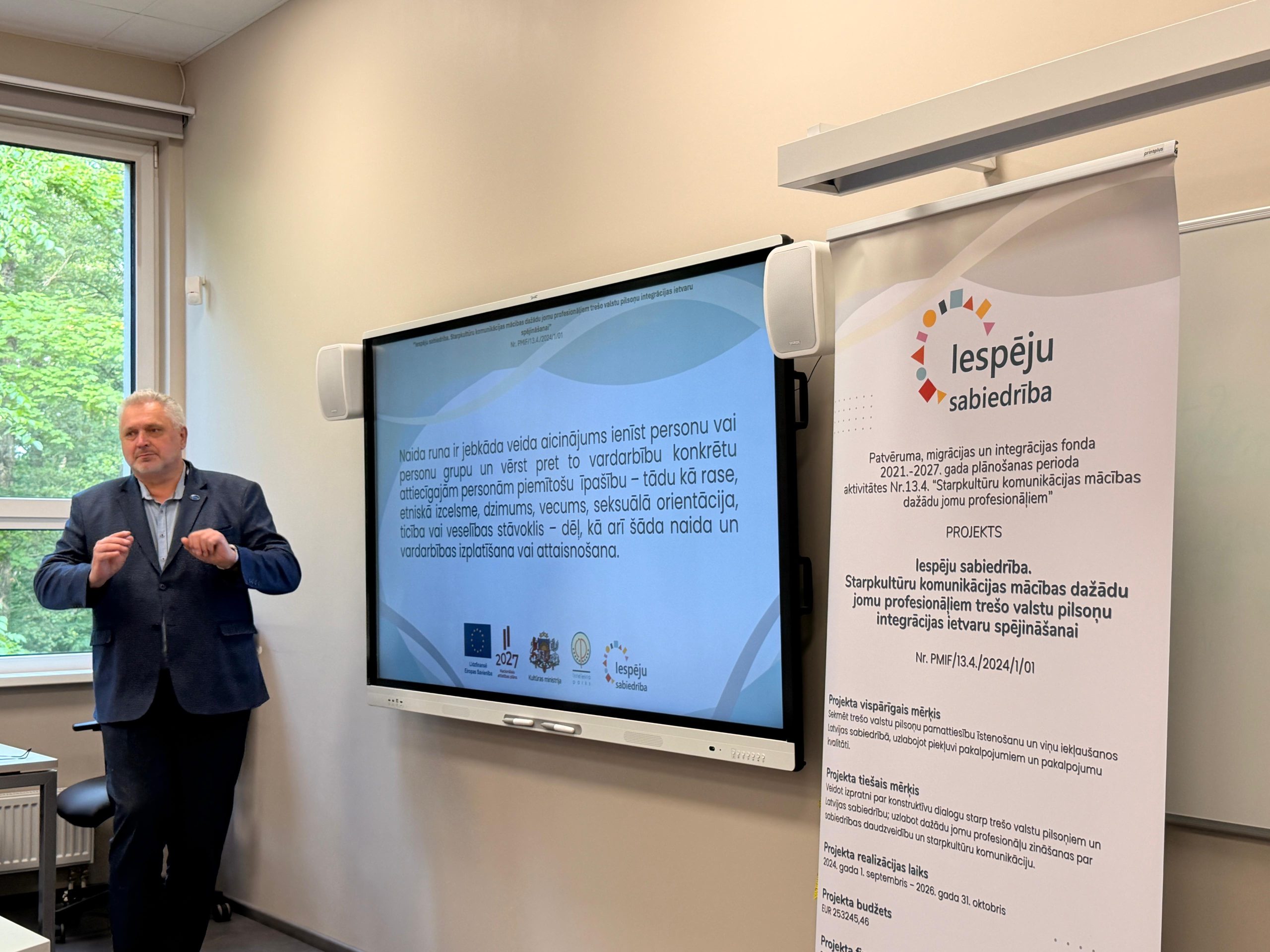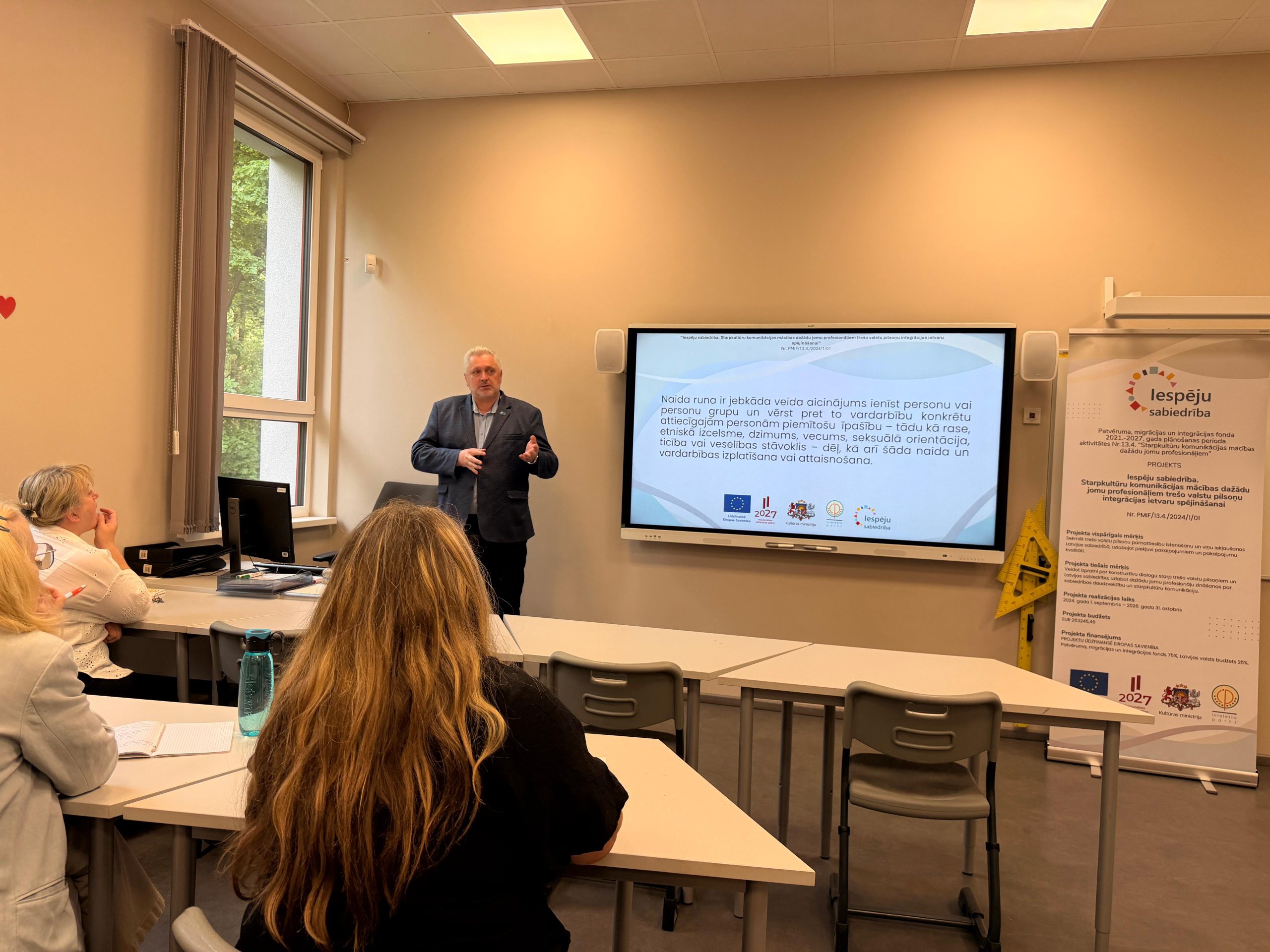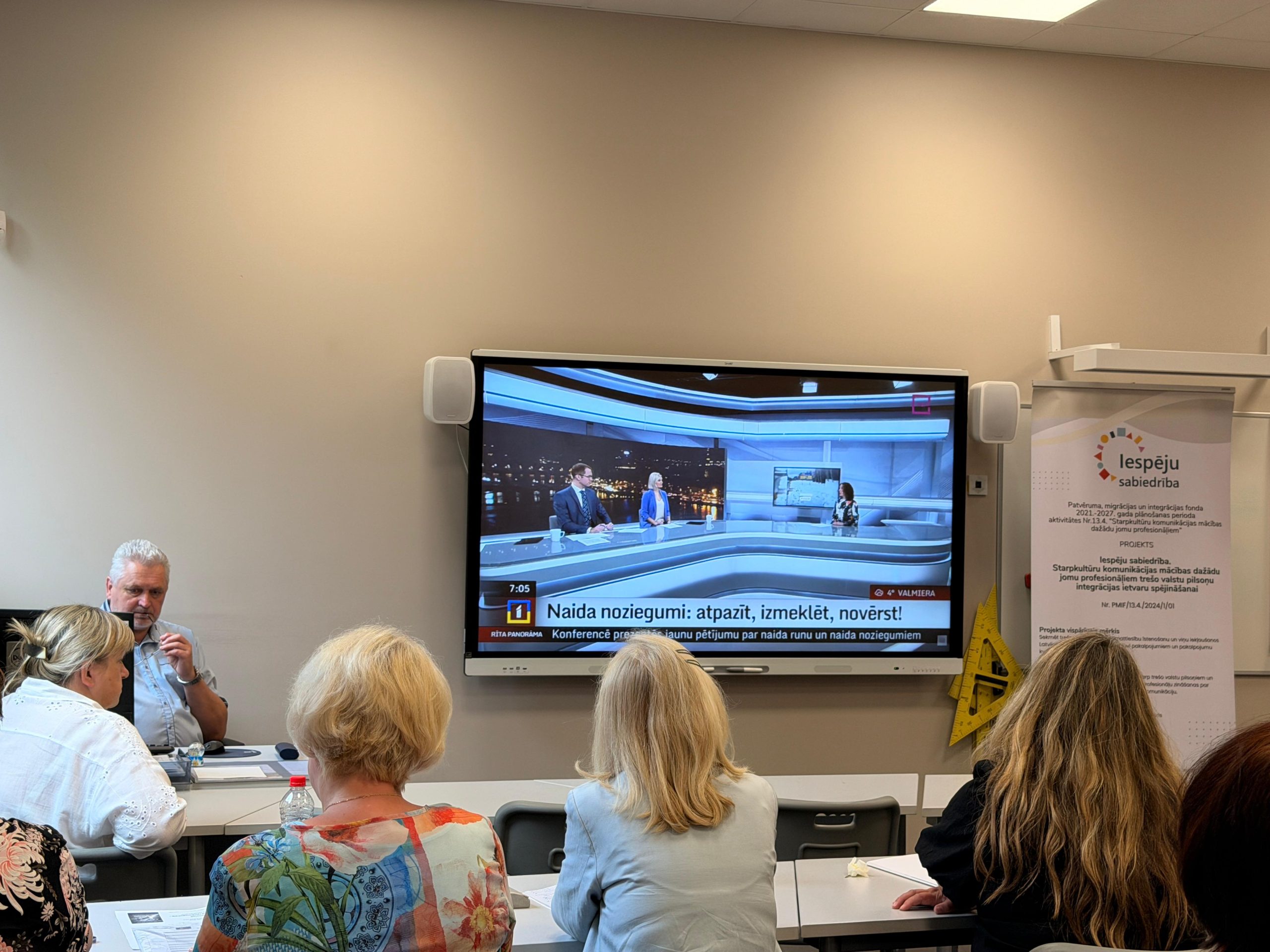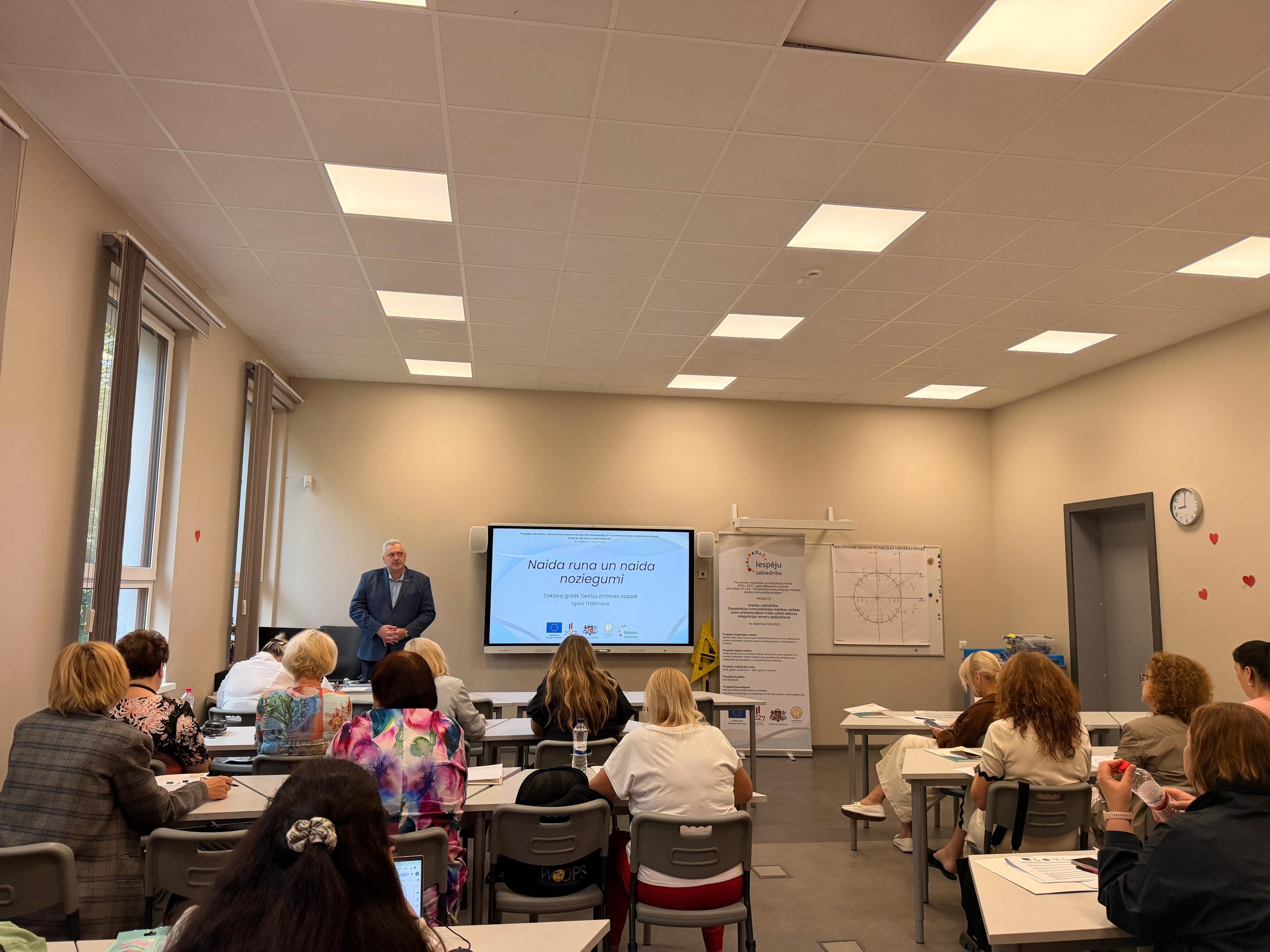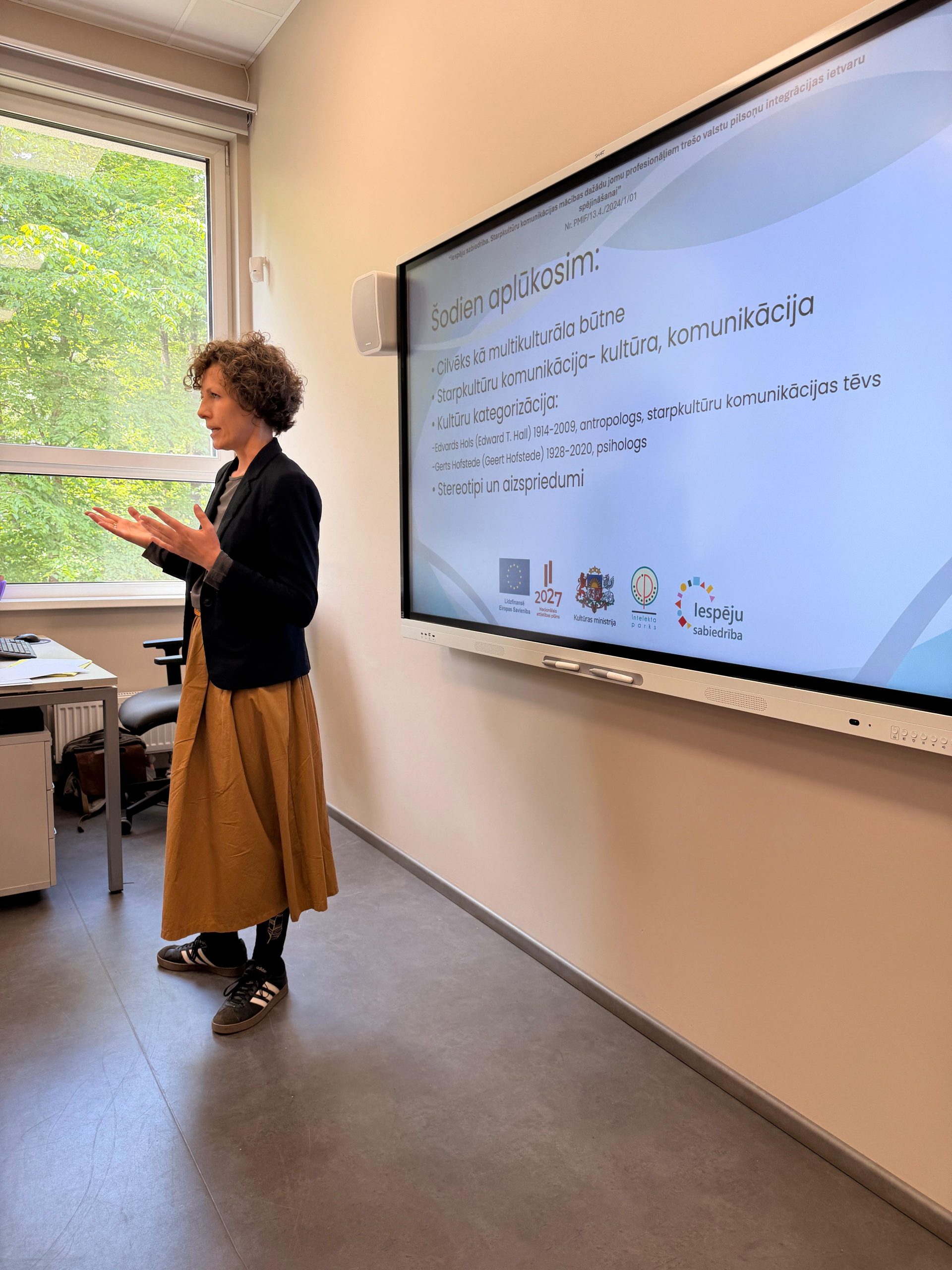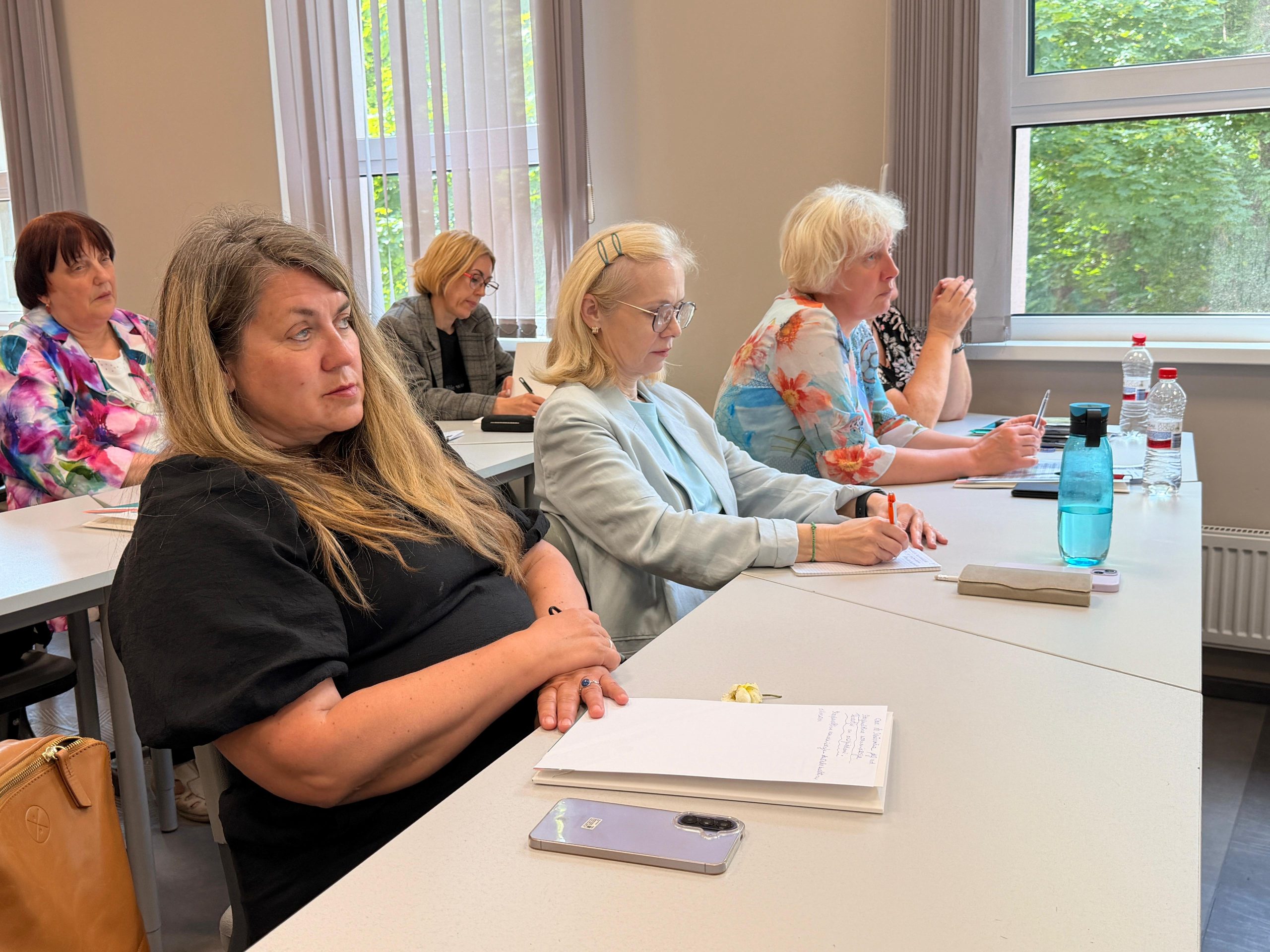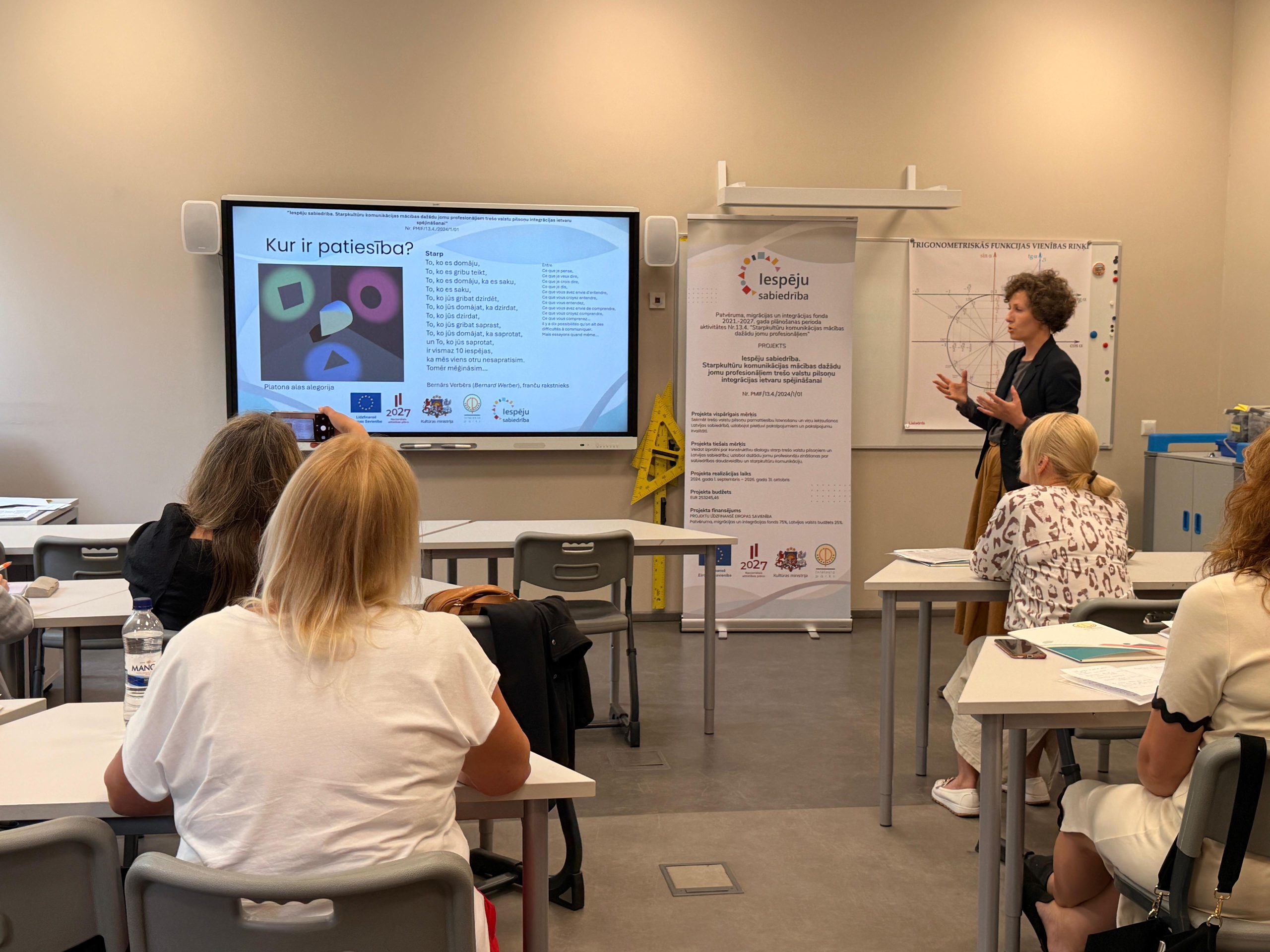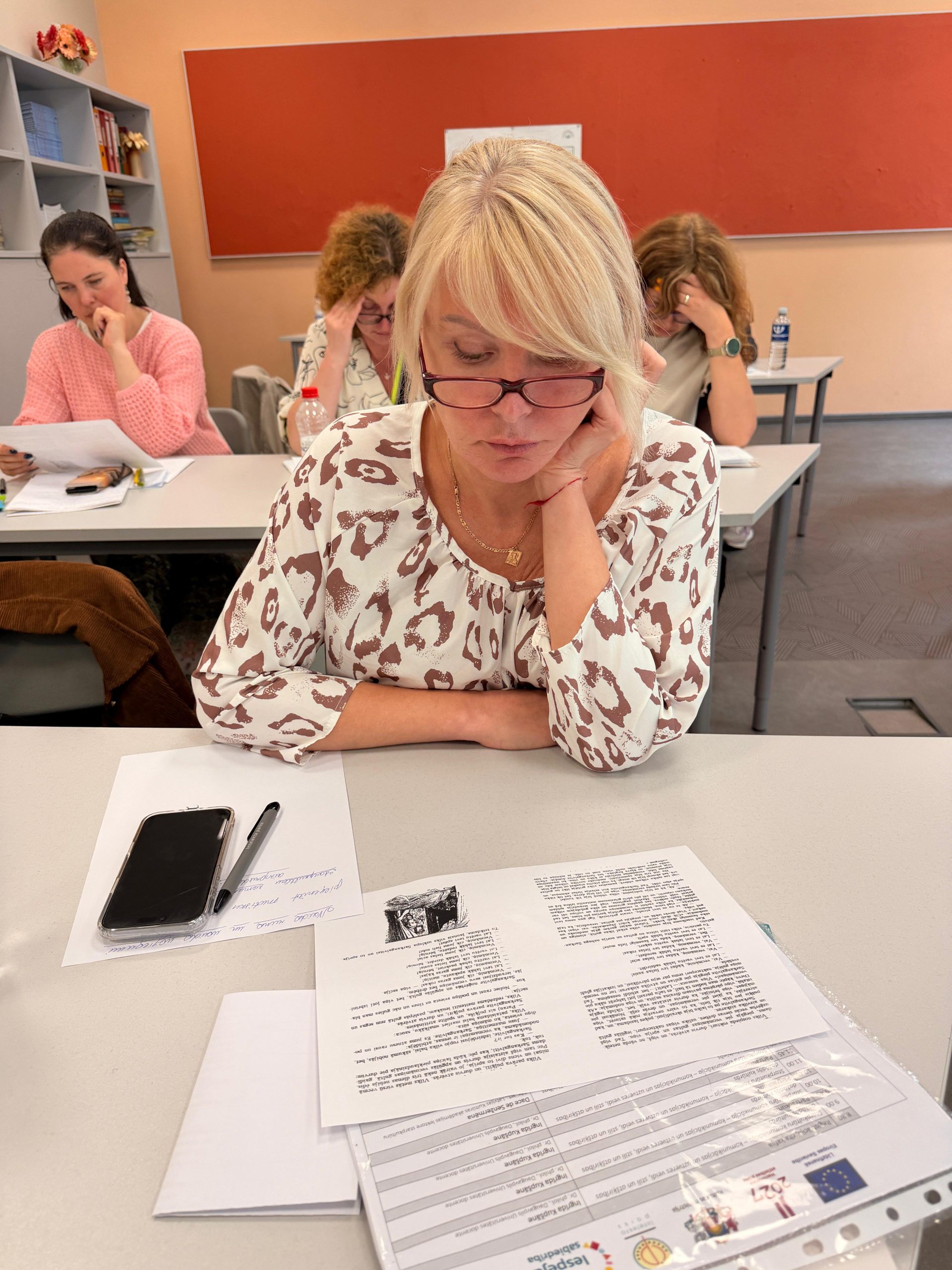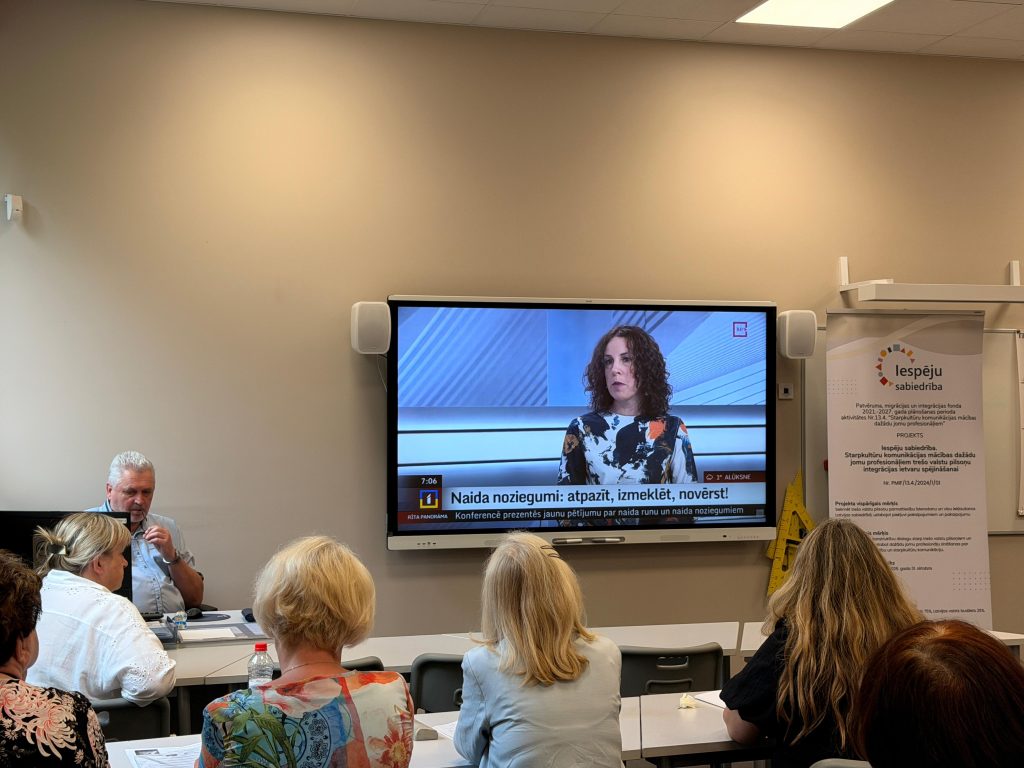
“These were truly valuable and productive days,” participants in the training course “Diversity in Society and Intercultural Communication” said after the first sessions. The education professionals highly appreciated both the content of the training and the opportunity to apply the knowledge gained directly in their professional work.
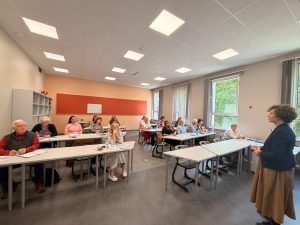
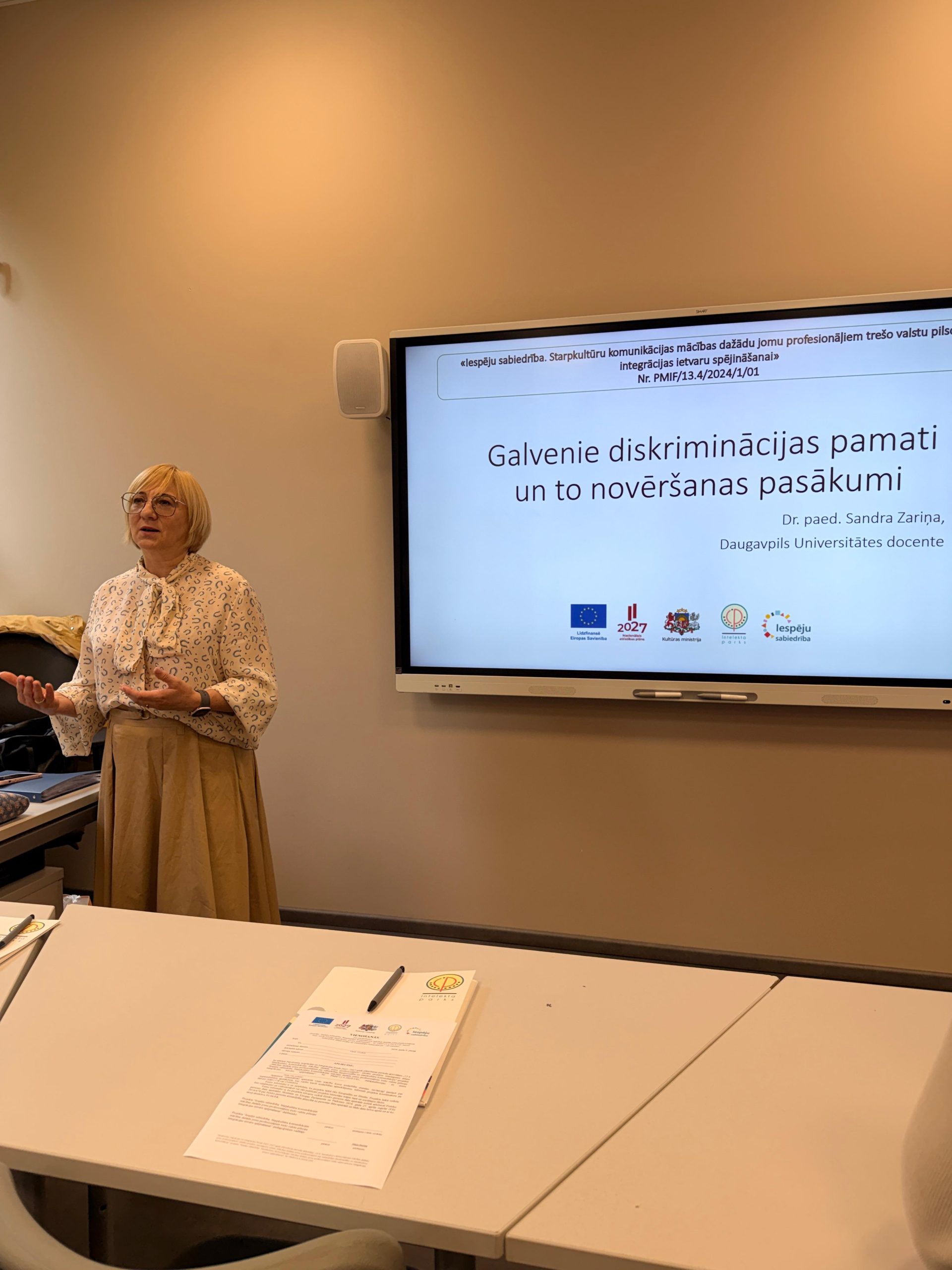
The training course was held on 9 and 10 June 2026 at Riga English Grammar School. Sixteen education professionals from Riga Ziepniekkalns Secondary School, Riga Secondary School No. 34, Riga Dārzciems Secondary School, Riga Rainis Secondary School, Riga English Grammar School, and Riga Nordic Gymnasium registered for the course.
During the training, participants enhanced their knowledge of social diversity, the prevention of discrimination, and effective intercultural communication. The sessions addressed the legal and practical aspects of preventing hate speech, examined stereotypes and prejudices present in society, and discussed potential risks of discrimination in professional settings.
Participants modelled and analysed a range of intercultural communication situations, seeking the most appropriate approaches for dealing with conflicts, misunderstandings, and differing cultural norms. Particular attention was devoted to promoting respectful communication, understanding the needs of different groups in society, and creating an inclusive, safe, and welcoming professional environment.
The training introduced a variety of practical methods for reducing discrimination and social exclusion. Participants also had the opportunity to share their professional experience, discuss challenges encountered in their everyday work, and jointly identify solutions for more effective cooperation with people from different cultural, linguistic, religious, and social backgrounds.
The training will continue from 25 to 27 August 2026.
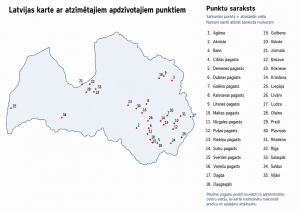
To date, a total of 232 professionals from a wide range of sectors and from all regions of Latvia have participated in the training during the implementation of the project. Participants have come from Aglona, Aknīste, Balvi, Cibla Parish, Dagda, Daugavpils, Demene Parish, Dubna Parish, Galēni Parish, Gulbene, Ilūkste, Jūrmala, Kalsnava Parish, Ķekava, Koknese, Krāslava, Liepāja, Litene Parish, Līvāni, Ludza, Malta Parish, Nīcgale Parish, Olaine, Preiļi, Pļaviņas, Puša Parish, Rēzekne, Riebiņi Parish, Riga, Salaspils, Saldus, Sutri Parish, Svente Parish, Varieši Parish, and Viļāni.
The participants represented the fields of education, non-governmental organisations, lifelong learning and extracurricular education, internal affairs and law enforcement, science, management and public administration, healthcare, employment, justice, culture, public relations and communication, insurance and customer service, business, the State Border Guard, and social care.