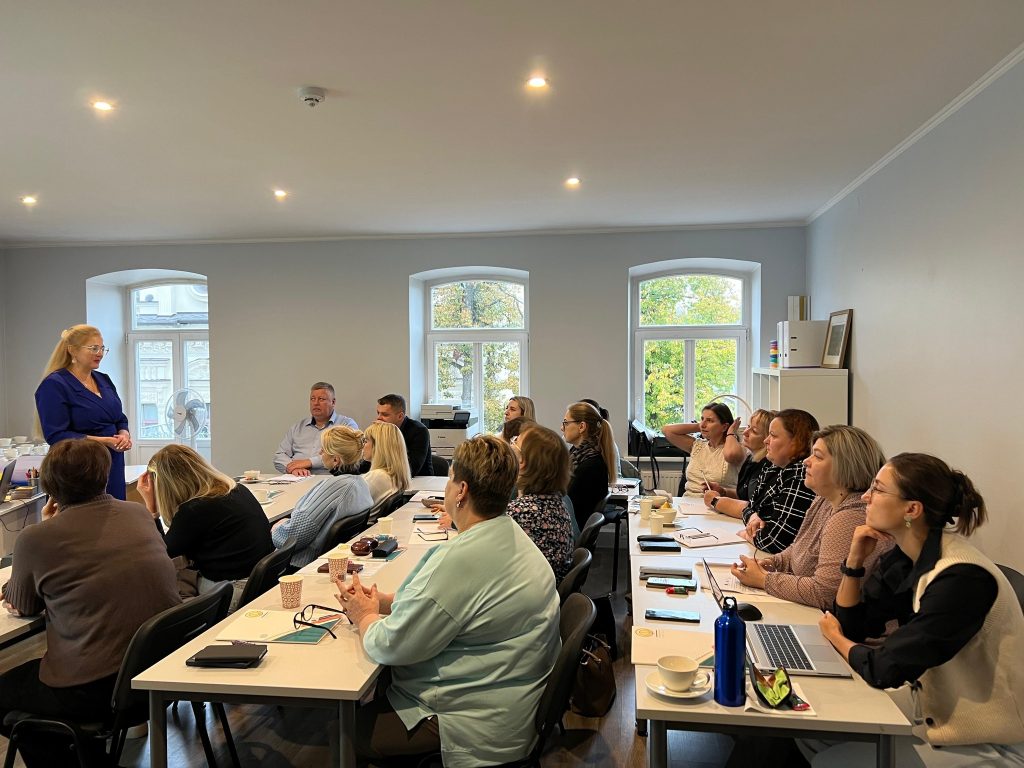
Between 3 October and 7 November 2025, the Society “Park of Intellect” initiated a successful collaboration with the Latgale Regional Units of the State Probation Service. Over the course of one month, 17 employees of the State Probation Service from Daugavpils, Rēzekne, Ludza, and Balvi Municipality completed the training course “Social Diversity and Intercultural Communication,” comprising 40 hours of instruction.
Under the guidance of experienced and professional lecturers, participants explored key topics related to hate speech and hate crimes, cultural competence, the foundations of discrimination, intercultural communication, stereotypes and prejudice, as well as international law and professional ethics. The training sessions were conducted in an interactive and engaging format, employing a variety of teaching methods such as discussions, group work, and case analysis.
This approach encouraged active participation and practical understanding of the course topics, thereby strengthening participants’ professional competencies in working with diverse groups within society.
In satisfaction evaluation questionnaires, participants of the training course highly assessed the topical relevance and practical value of the course content, emphasizing that the topics addressed reflected the current situation and were directly applicable to everyday professional practice. Particular appreciation was expressed for the sessions on discrimination, intercultural communication, stereotypes, and prejudice, as well as for the opportunity to analyse real-life situations and experiences in depth. Participants repeatedly highlighted the lecturers’ high level of professionalism, depth of knowledge, and ability to adapt flexibly to the audience, fostering lively discussions and effectively linking theory with practical examples. Special recognition was given to the diversity of the lecturers and to the invited guest speakers, including citizens of other countries, whose personal experience stories provided valuable and authentic perspectives. The interactive training format was also positively evaluated: discussions, group work, and the exchange of experiences encouraged active engagement and deeper understanding. Participants noted that the training process was well organised, varied, and tailored to the audience, creating a safe and open environment for the exchange of views. Overall, the course was described as very interesting, valuable, and inspiring, providing both new knowledge and meaningful opportunities for reflection and professional development.
This publication has been produced with the support of the Asylum, Migration and Integration Fund.
Responsibility for the content of the publication lies with the Daugavpils University Society for Lifelong Learning, Culture, and Science Communication “Park of Intellect”.
Project funding: THE PROJECT IS CO-FINANCED BY THE EUROPEAN UNION.
Asylum, Migration and Integration Fund – 75%, Latvian state budget – 25%.